
Machine Learning
This Machine Learning course provides an in-depth exploration of essential concepts, tools, and techniques in the field of machine learning. Starting with the fundamentals of Python programming, the course covers a wide array of topics including NumPy, Pandas, data visualization with Matplotlib, various machine learning algorithms like regressions, KNN, K-Means Clustering, Decision Trees, Random Forests, and Natural Language Processing. Additionally, students will learn about model deployment, ensuring they can integrate their models into production environments. With a combination of theoretical knowledge and practical exercises, participants will gain a solid foundation in machine learning, preparing them for real-world applications and further advancements in this dynamic field.

Modules
Programming with Python
In this module, you will learn Python programming concepts in detail, starting from data types and functions to classes and objects. This will create the base for starting the Machine Learning journey with Python.
NumPy
NumPy stands for Numerical Python and is a Python library used for working with arrays. It has functions for working with linear algebra, Fourier transform, and matrices. NumPy was created in 2005 by Travis Oliphant.
Pandas
Pandas is a Python library used for working with datasets. It has functions for analyzing, cleaning, exploring, and manipulating data. Created by Wes McKinney in 2008, pandas is essential for reading, analyzing, and cleaning messy datasets, making them readable and relevant.

Matplotlib
In this module, you will learn Matplotlib, a plotting library for Python and its numerical mathematics extension NumPy. Widely used in Machine Learning and Data Science for visualizations, Matplotlib is essential for creating static, animated, and interactive visualizations.
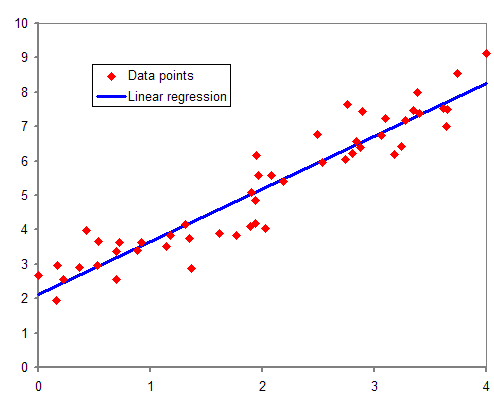
Regressions
This module covers regressions and their different types, which are used to quantify the relationship between one variable and other explanatory variables. Regressions can also identify how well determined the relationship is.
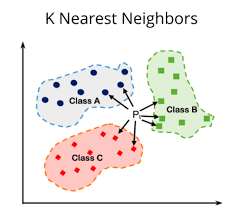
K Nearest Neighbors
In this module, you will learn about the k-nearest neighbors (KNN) algorithm, a non-parametric, supervised learning classifier. It uses proximity to make classifications or predictions and is one of the simplest and most popular classifiers used in machine learning.
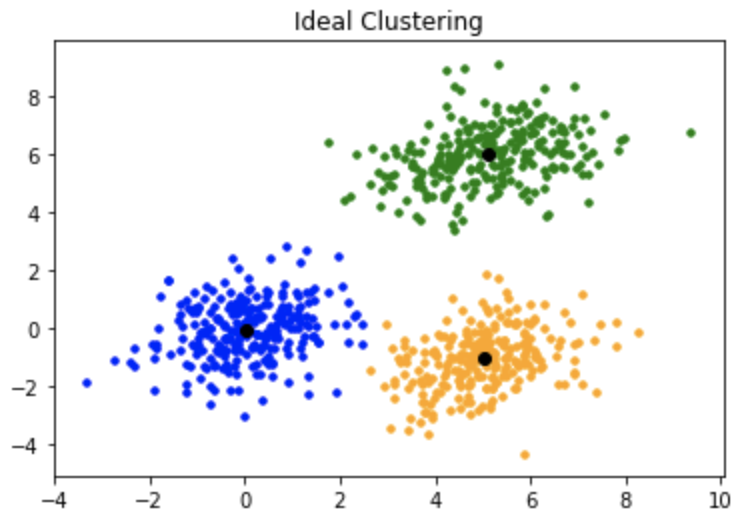
K Means Clustering
This module introduces K-Means Clustering, an unsupervised learning algorithm used to solve clustering problems. It partitions a dataset into 'k' distinct, non-overlapping subsets (clusters) based on similarity.
Decision Trees
Learn about Decision Trees (DTs), a non-parametric supervised learning method used for classification and regression. You'll create models that predict the value of a target variable by learning simple decision rules inferred from data features.
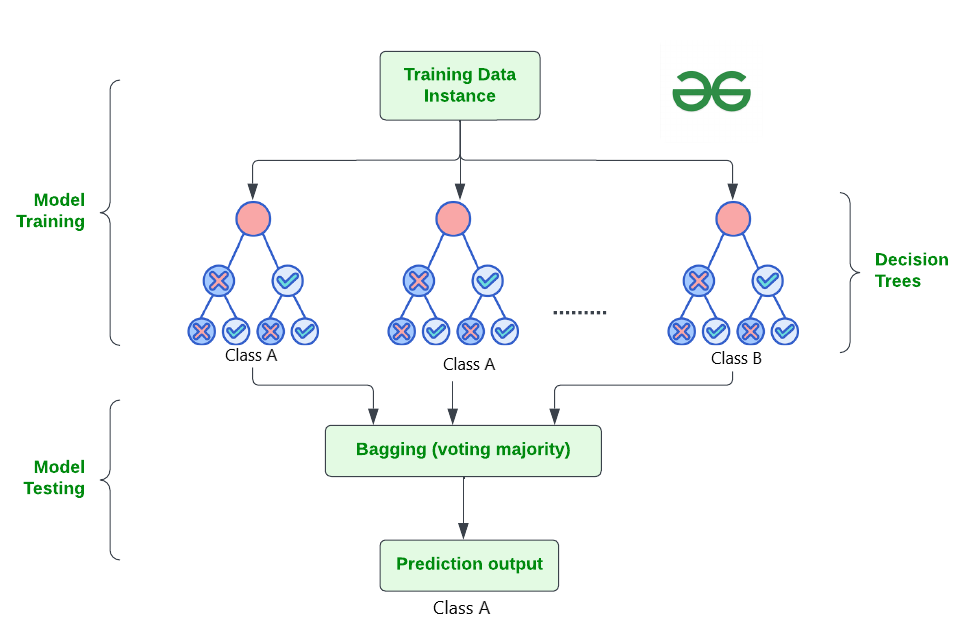
Random Forests
This module covers Random Forests, a commonly-used machine learning algorithm. It combines the output of multiple decision trees to reach a single result, solving both classification and regression problems.
NLP
In this module, you will learn about Natural Language Processing (NLP), which combines computational linguistics with statistical and machine learning models. This enables computers and digital devices to recognize, understand, and generate text and speech.
Model Deployment
This module teaches you about Model Deployment, the process of integrating your model into an existing production environment. You'll learn how to make predictions from your trained machine learning model available to others.
AMCNSS
Unlock your DevOps, AWS and ML career opportunities and hidden potential for remarkable growth and success through AMCNSS specialized and empowering DevOps and AWS Trainings.
DevOps and AWS Training for the reach of all Nepalese IT enthusiasts.
Happy Learning!